
Visa & Entry
Can I use China's 30-day visa-free entry?
Only if your ordinary passport nationality is on the current waiver list and your trip purpose fits the permitted short-stay categories.
Short answer
Use the 30-day visa waiver only when the official eligibility page clearly covers your nationality and your trip purpose. As of the latest US embassy FAQ, the policy applies to certain ordinary-passport holders traveling for business, tourism, family or friends visits, exchange, or transit.
It is not pre-approval. Border inspection still examines whether your purpose matches the waiver. If your travel plan looks like work, long-term study, media activity, or anything outside the listed purposes, you should not assume the 30-day waiver will carry you through.
Who this applies to
The policy is for ordinary passport holders only. The FAQ is explicit that temporary or emergency documents do not qualify for visa-free entry under this route, even if the nationality itself is otherwise eligible.
Minors follow the same basic waiver logic as adults, but the adult traveling with them still needs to carry supporting documents sensibly. A child on an eligible passport does not erase the need to show hotel reservations, onward travel, or family relationship documents when that is prudent.
How the 30 days are counted
The embassy FAQ says the 30-day stay is counted from the day after entry and runs continuously for 30 calendar days. That means a late-night arrival does not buy you an extra informal day just because you reached the hotel after midnight local time.
There is currently no cap in the FAQ on how many separate entries you can make under the waiver, but that does not mean back-to-back runs for a disguised long stay are risk-free. Border officers can still question whether your pattern matches the stated purpose of entry.
Check your entry path
Turn this answer into a source-checked entry route before you book.
What can disqualify you
The common mistakes are picking the wrong purpose, carrying the wrong passport document, or assuming that any 30-day tourist plan is automatically acceptable because your nationality is on a news headline. The official page recommends carrying supporting proof such as invitations, air tickets, and accommodation bookings that match your stated purpose.
Another frequent problem is confusing the 30-day visa waiver with the 240-hour transit policy. They are different products. The 30-day waiver does not need a third-country transit structure, while the 240-hour program does.
What to prepare before booking
Bring the ordinary passport you will actually travel on, make sure its validity covers the whole intended stay, and save the current official FAQ or embassy notice you relied on. Also carry hotel information, invitation letters when relevant, and proof of how long you plan to stay.
If there is any ambiguity around purpose, dual nationality, or document type, ask the embassy or visa office before you buy non-refundable flights. The cost of clarifying early is much lower than being turned around at check-in.
What travelers still get wrong
Travelers regularly assume the visa waiver is identical everywhere because they saw a social post listing countries. The actual question is narrower: whether your passport, purpose, and paperwork fit the currently published waiver conditions.
They also underestimate airline friction. Even when the rule is clear, a check-in desk may ask for hotel reservations or onward details. Having those ready is often the difference between a smooth conversation and a long argument at departure.
Open the illustrated guide
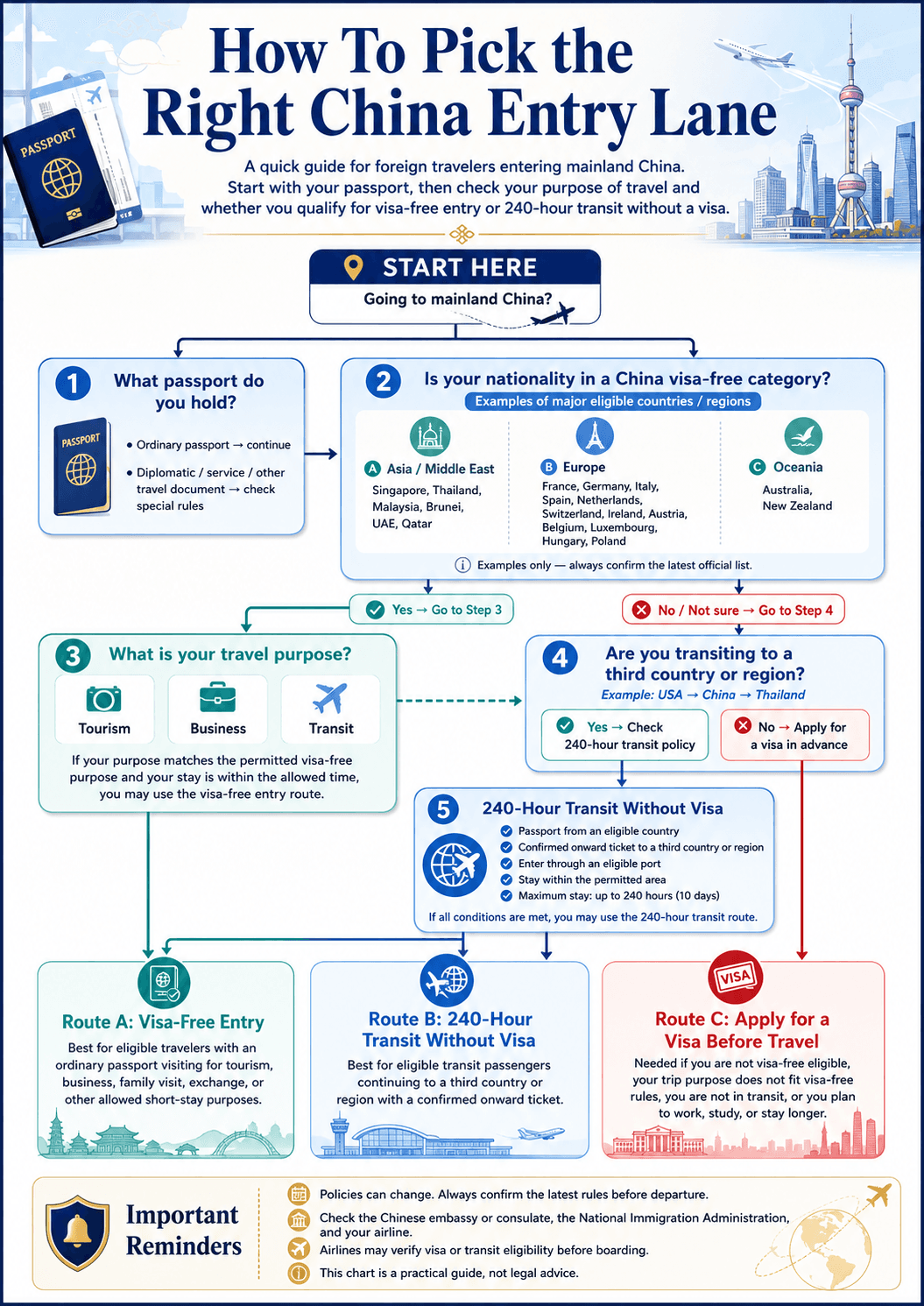
The 30-day visa-free path works only when your ordinary passport nationality is on the current list and your reason for travel fits the allowed purposes. The diagram highlights the common failure points before booking.
Keep this answer with your trip
Saved in this browser.
Practical answer, not legal advice.
Payment, telecom, app, and platform rules can change. Always verify current requirements directly with the relevant official authority or service provider before acting.
Sources
Check your entry path
Turn this answer into a source-checked entry route before you book.