
WaytoEastYour Guide to Traveling in China

Source-checked entry tool

China Entry Path Checker

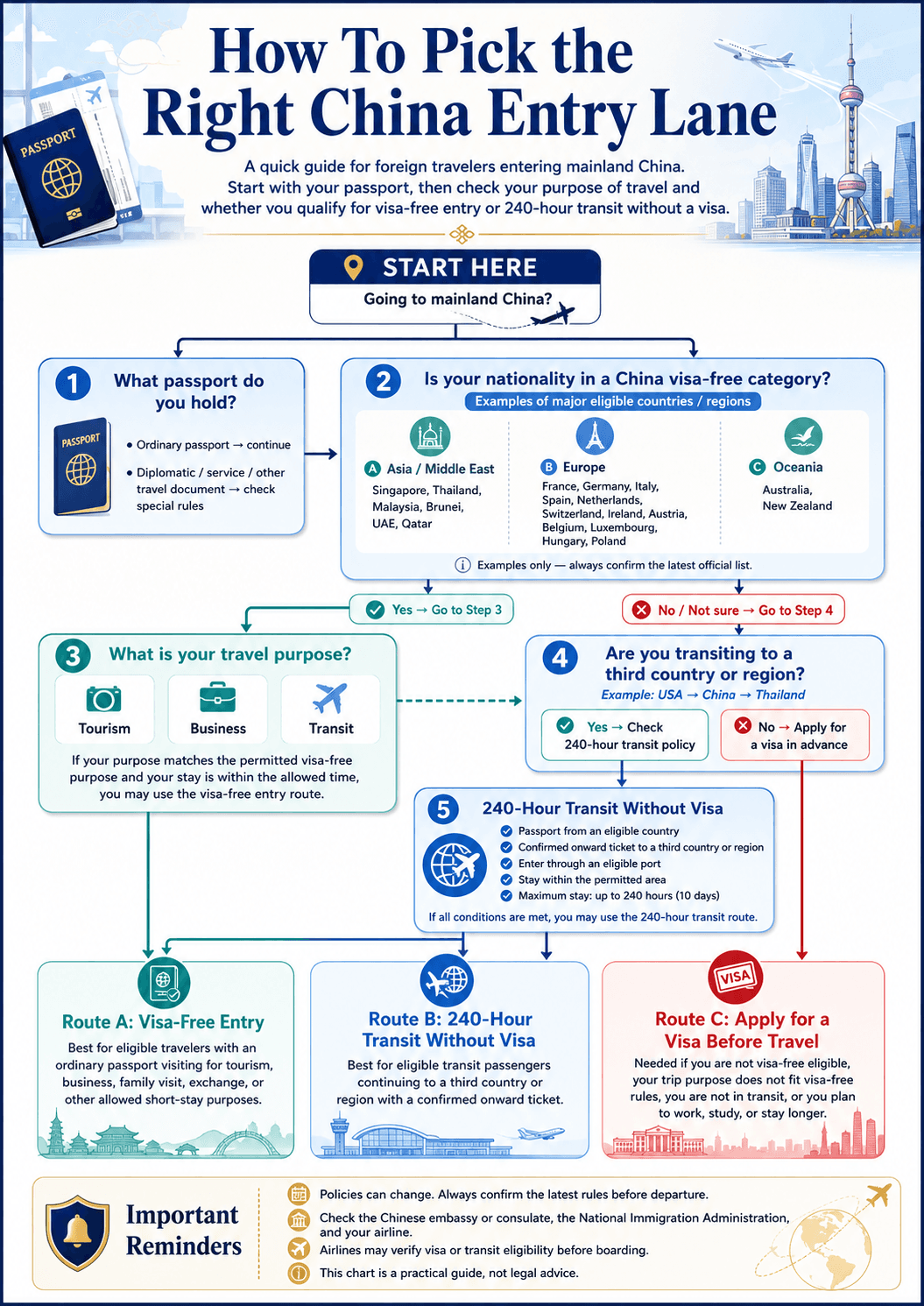
Classify a route as possible visa-free, possible transit-without-visa, ordinary visa likely, or official verification needed. The first release focuses on the largest English-language customer groups before multilingual versions are published.

Decision flow for matching China entry documents to route and purpose

Conservative result

Possible TWOV, needs route check

The route shape may fit a transit-without-visa analysis, but ports, permitted stay area, documents, and onward-ticket evidence still need official verification.

route dependent

Passport

ordinary

Stay

8 days

Route

United States -> Shanghai -> South Korea

Onward ticket

confirmed

Findings

Transit route shape may be plausible.

The route has an origin, mainland China stop, different onward country or region, and confirmed onward ticket inside the 10-day window. Ports and permitted stay area still need official verification.

Evidence: entry-us-ordinary-passport-check, entry-english-market-visa-free-check

Multiple mainland cities add permitted-area risk.

A transit-without-visa itinerary can fail if a city addition moves the traveler outside the permitted stay area for the chosen entry and exit ports.

Evidence: entry-us-ordinary-passport-check, entry-english-market-visa-free-check

Next actions

These are operational steps for booking and airline check-in. They do not replace official entry permission.

Open Source Watch
  1. 1. Verify eligible entry and exit ports on the current NIA policy page.
  2. 2. Confirm the permitted stay area covers every mainland city in the itinerary.
  3. 3. Keep the onward ticket with confirmed date and seat details offline.
  4. 4. Carry hotel bookings and the official policy link for airline check-in.

Sources checked

The checker uses the same verified claim layer as the planner and Arrival Kit. Current snapshot date: 2026-06-24.

U.S. travelers should verify visa or transit eligibility before booking around China.

U.S. ordinary passport travelers should not assume ordinary tourism entry is visa-free. For short China stops, the 240-hour transit-without-visa route may apply only when the itinerary, ports, nationality, documents, and onward third-country ticket all match the rule.

Last checked 2026-06-24 - recheck after 2026-07-24

Match the entry path to passport, purpose, stay length, and route.

Large English-reachable customer groups are not on one entry path. Some may use unilateral or mutual visa exemption, some may use transit-without-visa only when the route qualifies, and some should start from an ordinary visa application. The safe path depends on nationality, passport type, allowed purpose, stay length, route, and current policy wording.

Last checked 2026-06-24 - recheck after 2026-07-24

Business visitors should separate meetings from work-permit or special-approval activity.

China's transit and entry-facilitation rules may allow short business activities in some qualifying cases, but work, study, and news reporting still require prior approvals and appropriate visas. Port visas are not a general backup for missed planning; NIA instructions require a valid passport, application materials, and invitation or urgent-entry supporting documents.

Last checked 2026-06-24 - recheck after 2026-07-24

Not covered by the automated checker

  • - Hainan-specific arrangements, group tours, or special local permits.
  • - APEC cards, previous Chinese nationality, refugee documents, or emergency passports.
  • - Tibet, restricted areas, military zones, and sensitive research/media activity.
  • - Visa-center appointment timing, document completeness, or embassy case decisions.

English-first now, multilingual-ready later.

Entry rules are high-risk content, so translated versions should reuse this verified claim layer rather than creating separate unsupported advice.

日本語한국어ภาษาไทยTiếng ViệtBahasa IndonesiaالعربيةEspañol LATAMPortuguês BR